





Glossary Of Commonly Used Art And Framing Terms

Commonly used framing and art terms

CORRELATED BY SOME OF THE WORLDS GREATEST FRAMERS

A's

Abrasion Resistance. Ability of a paper, board or surface such as glazing or finished wood to resist scratching or wearing away through contact with another surface or object.

Abrasion. Wear damage caused by one surface rubbing against another or by the cutting action of hard particles trapped between two rubbing surfaces.

Abrasiveness. The property of a substance which enables it to abrade surfaces, almost the exact opposite of smoothness.

Absorbent. Term applied to papers that absorb water solutions or other liquids. Examples of absorbent papers are blotting and toweling products. Many mat boards tend to have absorbent properties.

Acid Burn. Is often identified by the small yellowish-brown line found on the artwork in many older matted pieces. This is a classic case of what happens when employing lower-quality materials in the framing of artwork. Many older pieces were backed with cardboard, which tends to yellow artworks from the rear of the piece, and if severe enough, to burn through to the front.

Acid Etched. In glazing and decorative work, acid etching alters one or both sides of the glass sheet to change its reflective qualities. When the etching is completed, all acids are neutralized and the surfaces cleaned.

Acid Free. Generally used as a reference to higher quality materials use in the origination and production of art images and the framing processes. Most woods, papers tapes and other materials contain at least some degree of acid that will negatively impact art over a long term. The best quality materials are made of components that either lack acids or from which the acidic qualities have been removed. Lesser quality products have had the acids neutralized by buffering, which will last some number of years. We recommend use of non-acidic products for all of our fine art framing. Technically, it is a product that has a pH of 7.0 or greater.

Acid. A substance capable of forming hydrogen ions when dissolved in water. Acids may be introduced during product manufacture, by migration from other materials, or from atmospheric pollution. Acidity is measured on a pH scale.

Acidity. State of being acid; the condition in aqueous solution, measured on a pH scale, wherein the concentration of hydrogen ions exceeds that of hydroxyl ions.

Acrylic Sheet. A solid thermoplastic sheet made from acrylic monomer. Noted for light weight, transparency, inherent weather resistance, color fastness, rigidity, high optical clarity, and impact resistance (half the weight of glass and many times more impact resistant). It is inherently stable and resistant to chemical changes that may cause yellowing or increased haziness. Clear, colorless acrylic sheet will not turn yellow as it ages like many common plastics. Thickness range from 0.060" to 0.236" for the picture framing and museum industries. Often used in oversized pieces due to weight and strength considerations. Usually a little more expensive than glass for products with similar characteristics.

Acrylic Surface Imperfections. Assorted small imperfections in the acrylic surface that occurred during the manufacturing process.

Activated Carbon. (Activated Charcoal)-Carbon that has been treated with high-temperature steam to produce a porous structure; it is an excellent adsorbent.

Adhesion (Bonding) Strength. Force required to cause a separation at the interface of two bonded surfaces.

Adhesive. A material that bonds two surfaces together. As used in the frame shop, for joining wood corners (usually polyvinyl acetate or PVA but sometimes animal glue or resins), temporary joining of materials such as pressure-sensitive and liquid or heat activated tapes, and the use of starch pastes such as wheat or rice.

Admixed. Added as an ingredient.

Adsorption. to gather (a gas, liquid, or dissolved substance) on a surface in a condensed layer:

Aging. A change in properties over a time span which is dependent on storage and display conditions. Aging with respect to paper and board usually implies a deterioration.

Alkaline Reserve. A paper additive such as calcium carbonate that serves to counteract the deleterious effects of the paper's own natural degradation, acidic inks, and any other acidic components in the environment that may contact the finished sheet of paper. Also commonly referred to as a "buffer."

Alkaline. Substances are considered alkaline when they have a pH above 7. They may be added to other materials to neutralize acids or to form an alkaline reserve or buffer for the purpose of counteracting acids that may form in the future. A number of chemicals may be used as buffers but the most common are magnesium carbonate and calcium carbonate.

Alpha Cellulose. The purest form of cellulose. Cellulose is the chief constituent of all plants. Cellulose has three chemical forms or classifications: Alpha, Beta and Gamma. The Alpha form of cellulose has the longest, and therefore the most stable chemical chain, in turn creating the longest and strongest paper making fibers. (see Cellulose)

Animal Glue. A hard, impure, protein gelatin, obtained by boiling skins, hoofs, and other animal substances in water, that when melted or diluted is a strong adhesive.

Antioxidant. A chemical substance that can be added to a plastic resin to minimize or prevent oxidizing of the plastic (e.g., yellowing or degradation). Chemical attack by oxygen may render plastic brittle or cause it to lose mechanical properties. A material may be oxidized as a result of exposure to heat, light, or other energy forms.

Anti-reflection. The phenomena of reducing light reflection on the surface of a material and increasing its transmission at the same time.

Anti-reflective Glazing (Glass or Acrylic) It is created by an optical coating of the glass or acrylic rather than etching, as used in a non-glare product.. Exhibits the lowest optical impact of all glazing types, transmitting the highest amount of light without reflection. Will occasionally actually enhance the viewing experience.

Archival Products. In the making of art, refers to the components used for production, such as inks, pigments such as acrylic and oil paints, watercolors and pastels, that meet the highest standards of permanence. Papers, canvas, mounting and matting boards used to display resulting artwork are of the highest quality, free of acids and lignins.

Archival quality paper (board). Paper (or matboard) determined to have good archival qualities.

Archival. Refers to both products and techniques, that when used in proper combinations and sequences, will optimize preservation and historical integrity of whatever it is that is framed. In theory, an archivally framed piece of art should essentially be removable in 100 years and show little to no damage accruing from the process itself. Most often damage, if it occurs at all, is from environmental impacts such as light and humidity, which are often beyond the control of the framer.

Artist Enhanced. Usually refers to a limited edition print, either on canvas or paper, which has been modified by the artist through the addition of brushstrokes of paint or pigment. It is often considered to add value to the piece of art.

Artist Proof (A/P). These are prints in a limited edition that have traditionally been reserved or held back by the artist and or publisher for his or her use. They often consist of a few to a few percent of the production run, and are often sought after by collectors who perceive them to have a slight value premium over the rest of the run. The notation “AP” and an appropriate number are written in pencil by the artist when the piece is signed.

Artwork. With reference to framing, preservation and presentation, it is the object of the effort. It may have either extrinsic or intrinsic value. It may be attached only via sentiment to its owner. It may be an object, a memory, a graphic or painting or a representation thereof.


B's

Back. In boards composed of plys, the side of finish is usually referred to as the facing or cover paper; the other side of the board is the back; the sheet applied to this back side is known as the backing.

Filler Board. Material such as foam board used to fill the back of the frame when the framing package is complete and ready for assembly. It is held in place by framer's points and then sealed by either a dust cover or heavy duty moisture-activated tape.

Barrier Paper. A paper or paper board used in framing to separate materials. Often employed to obstruct or impede migration of art-degrading substances such as acids and lignins from non-archival framing materials, such as woods and fabrics, to the artwork.

Barrier Sheet. A layer of impermeable material, such as aluminum laminate or
glass, installed within the framing package; to obstruct or impede passage-such as acid migration, light, temperature, humidity, pollution and insects. Also a coating or application on one side of paper to provide increased opacity or other character.

Bevel Board. A board, usually made of foam or primed wood, that has a cut or milled edge that chamfers toward the artwork. Such boards are normally covered with decorative fabrics or papers, and often only the beveled portion shows in the completed framing package.

Bevel. The angle or inclination of a line or surface that meets another at any angle but 90°. Usually refers to the angle on which the window opening of a mat has been cut, revealing the center of the matboard. Normal cuts are in the range of 45 degrees, with a Reverse Bevel being a cut that slants away from the image so that the center of the matboard faces the artwork.

Black Core. Refers to a matboard which has a center core of black rather than the more standard white or cream cores.

Bleach(ing) - The process of whitening or lightening the color of a material by means of oxidation through the use of chemicals or exposure to sunlight. A chemical high in chlorine content used to remove dark stains from paper, cloth and wood products. In paper pulping it removes the impurities and lignin.

Bleed - as a printing term, it refers to the technique of making an illustration extend beyond the intended edge of the paper, so that when the paper is trimmed the illustration appears without a margin.

Bloom. This is a milky haze that may appear on an oil painting. It is most often caused by water vapor that has been captured in the painting varnish.

Board. In picture framing, the term may include any variety of rigid and semi-rigid sheet materials including foam board, and paper board.

Border or Plate. The white, colored or decorative edge surrounding an image.

Brightness - Reflectivity of a paper sample using light of specified wavelength (457 nm), commonly used as an index of whiteness.

Bristol Board. A stiff, durable cardboard made in thicknesses of one to four .006 inch plys, and in several finishes, especially a high or plate finish.

Buffer. Chemical solutions that resist change in pH when acids or alkalis are added.

Buffering Agent. Chemical added to regulate the pH. The most common buffering agent is calcium carbonate (CaCo3.)


C's

Conservation (Preservation) - The use of methods and materials designed to maintain the condition and longevity of the item.

Crazing - Tiny, hair-like cracks on the surface of an acrylic sheet resulting from high internal stress. This effect results from chemical exposure in combination with mechanical forces or impact.

Calcium Carbonate - A chemical compound (CaCO3), occurring in nature as oyster shells, calcite, chalk, limestone, etc. or obtained commercially by chemical precipitation. Chalk as it occurs naturally has a limited use in paper making because of impurities present. Precipitated carbonate is preferred because of its high purity, high brightness and controlled particle size and shape. Calcium carbonate is used as a filler in alkaline paper making, as coating pigment and as a buffering agent.

Casein - a protein precipitated from milk, as by rennet, and forming the basis of cheese and certain plastics.

Cellulose - A complex carbohydrate, (C6H10O5) found in all plants t forms the solid framework or cell walls. It exists as thousands of atoms of carbon, hydrogen, and oxygen joined together to form long chain molecules called polymers. The molecular structure of cellulose makes it ideal for paper making, since a mass of long, intertwining fibers composed of an orderly parallel arrangement of cellulose polymers has great strength and flexibility. The long, wavy polymers are hygroscopic, hence they attract and absorb moisture.

Chalk - A soft, compact calcite, CaCO3 , native chalk (Calcium Carbonate) is a fine, soft structure consisting of fragments of tiny marine organisms, containing varying amounts of silica, quartz, feldspar, or other mineral impurities, generally gray-white or yellow-white. A fine grained limestone, or soft, earthy form of calcium carbonate; used in putty, crayons, and paints. Chalk in pigment form is called whiting; artificial calcium carbonate is known as precipitated chalk.

Chemical degradation - the breakdown of an organic compound.

Chemical Properties - (of paper) Grouping of properties that includes certain characteristics of the fiber such as alpha-cellulose content, as well as properties related to the nonfibrous constituents such as pH, acidity, rosin content, ash content, starch content, and moisture content.

Chemical Pulp - Any pulp obtained from wood (or other plant raw material) principally by chemical means. The two major types of chemical pulp are kraft pulp and sulfite pulp.

Chemically Pure (c.p.)—Of the highest grade, but not necessarily 100 percent pure; sometimes applied to commercial pigments to describe a grade free from extender or added inert pigment.

Clay—In papermaking, clays are used for paper coatings and fillers. A number of grades are available depending on particle size and shape, as well as brightness. Kaolin, China Clay, Paper Clay, Bentonite, Attapulgite Clay, Laminated Clay. In clay-coated paper it produces a glossy surface that allows for sharper printing and a better rendition of colours.

Coated Art Paper—A paper used for high-grade printing work, especially in halftone printing, where definition and detail in the handling of shading and highlights are important. It is usually a high-grade coated paper having a high brightness and a glossy, highly uniform printing surface.
(a) Clay-Filled Paper—Paper containing an appreciable amount of clay as a filler, especially as distinguished from paper filled with other inorganic white pigments.
Coating Pigments—Very finely divided mineral materials which constitute 60 to 90% of the coating layer. Fine grades of clay are most commonly used. Other pigments used are titanium dioxide, calcium carbonate, talc, zinc oxide, and satin white.
Color Circle, Color Wheel—Conventional means of arranging the primary colors (blue, red and yellow) and their principal mixtures or secondary colors (orange, green and violet) and other principal mixtures or hues, so as to demonstrate their sequential relationship.

Colour Fastness—Property of a dyed paper to retain its colour in normal storage or to resist changes in color when exposed to deleterious influences, such as heat and light.

Colour Perception—Ability to discern colour difference or variation based on three attributes:

  1. Pure Colour—A color or hue that is unmixed with other hues. Beam-of-light or spectrum colors are pure colours, but no paint or pigment colour is free from some elements or another hue.
  2. Hue—visual sensation that distinguishes one colour from another.
  3. Brightnessvrelative position on a light-to-dark scale. Also called luminosity or tone value.
  4. Saturation—relative presence or absence of gray. Also called purity, intensity, or chroma.

Colour Specification—The quantitative description of a color. The colour of papers is often specified in terms of the trichromatic coefficients x, y, and z, most commonly by applying the Munsell system or the CIE system.

Cold Colours—Designating tones or colours in the part of the colour spectrum, such as pale gray, that suggests little warmth. Bluish tones evoke a cool psychological reaction, as opposed to reddish-hue colours which produce a warm response.

Warm Colours—Designating tones or colours in the part of the colour spectrum, such as yellow red, that suggests warmth. Reddish tones evoke a warm psychological reaction, as opposed to bluish colours which produce a cool response.

Colour Shift—A change in a colour from its original hue tint or shade.

Colour Stability—Technical term for the property of resistance to change of colour fading, darkening, or hue variation.

Colour—A sensation aroused in the observer's mind as a response to the stimulus of the radiant energy of certain wavelengths acting on the eye's mechanism. Colour is that property of a substance which determines the nongeometrical part of the visual sensation experienced by an observer who views the substance. The colour of any specimen depends upon the spectral character of the illuminant (the type and intensity of the light), on the geometrical and other conditions of illuminating and viewing the specimen, on the spectral reflectivity of the specimen, and on the characteristics of the observer's eyes. Hence, the only characteristic of a specimen which is the same under all conditions of observation and for all observers is its spectral reflectivity. Knowledge of the spectral reflectivity of a specimen permits calculation of its CIE color specification, i.e.-specification of dominant wavelength, purity, and luminous reflectivity.

Coloured Pigments—Grouping that includes minerals (e.g., iron oxides, ultramarines, umbers, sienna and chrome yellow), lampblack, and both organic and inorganic synthetic pigments. The principal organic synthetic pigments are colour lakes.

Colourfast—Having colour that will not run or fade with washing or wear: e.g. a colorfast fabric.

Colourless—Lacking color. Weak in color; pallid. Lacking animation, variety, or distinction; dull.

Conservation—with artworks—it is the examination and documentation of condition, the ability to treat an object in a manor intended to arrest deterioration, to stabilize and maintain condition, to insure longevity, to restore that which has been damaged.

Conservation Board—A term used to describe a board considered to have good conservation, preservation, or archival qualities.

  • Note 1.—Both terms, Museum Board and Conservation Board, are often used interchangeably to mean the same thing. 2.-Many use the term Museum Board to designate all cotton and the term Conservation Board to designate archival quality, non-cotton boards

Conservation Quality—a term used to describe products that are designed to be safe for preservation framing. (a) also a word used to describe materials a non invasive

Conservator—a professional whose primary occupation is the practice of conservation. One who has the training, knowledge, ability and experience to perform conservation activities.

Core—In matboard, the central or innermost part; the material between the face paper and the backing paper.

Corrugated Board—Structure formed from one or more paperboard facings and one or more adjoining corrugated members (fluted portion), used for making corrugated board boxes and other products. The various structures are: Single Face-formed by one corrugated member glued to one flat facing; Single Wall-formed by one corrugated member glued between two flat facings; Double Wall-formed by three flat facings and two intermediate corrugated members; Cross Laminated Double Wall-two sheets of single wall laminated together with the flutes running in opposite directions; Triple Wall-formed by four flat facings and three intermediate corrugated members. (a) "e flute" (b) "f flute"

Cotton Content—Percentage of cotton fiber in pulp or paper.

Cotton Fiber—Content Paper that contains 25% or more cellulose fibers derived from lint cotton, cotton linters.

Cotton Linters—The short fibers that adhere to the cotton seed after ginning. Linters are cut from the cottonseed by a second "saw gin" operation. If all linters are removed in the same operation, the product is called "mill run linters". The technology for processing linters into usable pulp was developed in the 1950's. It involves mechanically removing the fuzz left on the seed after the long fibers for textile production have been removed. This is a necessary step to optimize the recovery of cottonseed oil which is a major by-product. No cotton is grown specifically for paper making. Cotton fiber and cotton linters are almost 100% pure cellulose yielding a minimum of waste.

Cotton—Cotton is used in the manufacture of quality papers and may be introduced into the papermaking process in the form of cuttings from the textile industry or as cotton linters.

Curl—The curvature developed when one side of a paper specimen is wetted. It was formerly used as a measure of the degree of sizing.


D's

Delignification—the removal of all or part of the lignin from the wood by chemical treatment.

Deterioration—A permanent change in physical properties that diminishes or impairs quality, character, or value.

Dextrins—British gum—a soluble, gummy substance, formed from starch by the action of heat, acids, or ferments, occurring in various forms and having dextrorotatory properties: used chiefly as a thickening agent in printing inks and as a substitute for gum arabic.

Dimensional Stability—That property of paper that relates to the constancy of its dimensions, especially as they are affected by changes in moisture content and/or temperature.

Discolouration—a discolored marking or area; stain or the state of being discolored.

Durability—The degree to which a paper retains its original qualities under continual usage. This is not to be confused with permanence which is the degree to which a paper resists chemical action which may result from impurities in the paper itself or agents from the surrounding air.

Durable—Capable of withstanding wear and tear or decay. A manufactured product that can be used over a relatively long period without being depleted or consumed.

Dye—Coloured soluble substance which imparts a more or less permanent colour to another material.


E's

Embellishment—A term most often used with mat decoration, the creating of lines, colored panels, applied paper and the like.

Erasability—in matting the ability of a surface to with stand the removal of light pencil lines with a rubber or gum eraser

Equilibrium—a state of balance due to the equal action of opposing forces.


F's

Facing Paper—Lightweight paper, such as fancy cover, book, and manila. It is pasted on cores or pulp boards of various thickness to produce boards mounting and mat boards requiring plain or fancy covering.

Facing—One of the two outer layers of a laminate. A covering in front, as an outer layer.

Fade—To lose brightness or brilliance gradually. To disappear gradually. To lose or cause to lose brightness, brilliance, contrast, or definition of line, form and color.

Fading of Colours—The gradual loss of colour of pigments and dyes and inks that are chemically unstable or are exposed to extreme conditions that accelerate changes. ( see Permanence)

Fading—A gradual change in colour of a paper. It is usually applied to the change produced by light.

Fiber—Paper pulps are composed of fibers, usually of vegetable origin (see cellulose).

Fiber Analysis—Microscopic differentiation and counting of fibers to determine the approximate percentages by species or type in a given sample of pulp or paper.

Fiber Composition—Percentages of different fibers present in a particular sample of stock, as determined by fiber analysis.

Fiber Content—Content of cellulosic material, usually expressed as a percentage of the moisture-free paper. The fiber content is usually determined by weighing a moisture-free sample before and after ignition, assuming all volatile matter as fiber.

Filler—In paper, an inert finely divided material added to a paper making furnish to modify the sheet properties by filling in the void spaces between fibers, most commonly a mineral filler.

Finish—In paper the surface characteristics . (see speciality serfaces)

Foam Board—Usually a polystyrene-centered board laminated on each side with one ply of paper (kraft, rag, alpha cellulose, sulfite). Used in picture framing for mounting, backing and as filler board.

Formation—In reference to paper, a term describing the manner in which paper fibers entwine. Formation affects papers density, porosity and visual characteristics.

Fugitive Colors—Pigments and dyes that fade and lose color rapidly on exposure to light.

Furnish—The mixture of various materials that are blended in the stock suspension from which paper or board is made. The chief constituents are the fibrous material (pulp), sizing materials, wet-strength or other additives, fillers and dyes.


G's

Gelatin Gelatins—A colorless or slightly yellow, transparent, brittle protein formed by boiling specially prepared skin, bones, and connective tissue of animals and used in foods, drugs, and photographic film. The best grades of gelatin are colorless, odorless, and tasteless, used as a high-purity alternative for glue in paper coating and sizing.

Gloss Finish—Extra smooth finish applied to paper, generally to achieve superior printability. Also called Mirror Finish. ( see finish Effects)

Gloss—A surface luster or shine.

Glucose—a sugar, C6H12O6, having several optically different forms, obtained by the incomplete hydrolysis of starch.

Glue—Adhesive of animal origin, composed of complex protein structures. In modern usage, the terms, "glue" and "adhesive" are used interchangeably and may also include petrochemical adhesives. (see Adhesive)

Groundwood Papers—Low cost papers made primarily from mechanical pulps. Such papers are characterized by relatively high lignin content.,

Groundwood Pulp—A mechanical wood pulp of relatively short fibers.


H's

Hardwood pulp—produced from hardwood

Hemicellulose—any of a group of gummy polysaccharides, intermediate in complexity between sugar and cellulose, that hydrolyze to monosaccharides more readily than cellulose.

High-Alpha Pulp (Alpha Pulp) ( Alphacellulose)—Bleached wood pulp that has an alpha cellulose content above 88%.

Hygroscopic—absorbing or attracting moisture from the air.


I's

Illustration Board—A pasted board used principally for ink and water color. A typical drawing paper is pasted on both sides of the board (usually a filled pulp-lined board or a pasted board). Usual properties of drawing paper, such as finish and sizing, are essential, but hard sizing and good erasing quality are most important.

Impurities—Something that contaminates, pollutes, taint or makes impure.

Inert—having little or no ability to react, as nitrogen that occurs uncombined in the atmosphere.

Infrared—The invisible part of the spectrum between radio waves and the red portion of the visible spectrum, consisting chiefly of thermal rays. The Infrared Spectrum consists of wavelengths from 700 nanometers (just longer than red in the visible spectrum), to 1,000,000 nanometers (on the border of the microwave region).

Infrared Spectroscopy—The science dealing with the spectral analysis of compounds using radiation in the infrared region.

Ink Absorptivity—Property of paper that characterizes the rate and amount of ink vehicle penetration into the paper substrate.

Ink Resistance—Resistance of a paper surface to ink penetration.

Ink—A fluid, semi-fluid, or paste material containing coloring matter and used for pen and brush drawing, writing, and printing. Inks for these purposes differ from one another in their composition and physical properties. Commonly, a colored liquid used for writing and drawing. Printing inks are generally thicker and viscous. Inks may be permanent (non-fading), or may fade in time.

Inorganic Pigments—Those natural pigments prepared from minerals and ores (e.g., earth colors), or those synthetically made which are chemically prepared from the metals (e.g., metallic oxides). The most stable and inert pigments are in this class.

Inorganic—Being or composed of matter other than plant or animal. Mineral.

Interleaving Paper—A paper (usually of tissue weight) which is placed in front of illustrations in books or between two or more engravings, etchings, sheets of cellulosic films, etc.

Interleaving Tissue-A tissue, used for separating or protective purposes, in a variety of grades.

J's & K's

Kappa Test-Kappa Number—modified permanganate test value on pulp which has been corrected to 50% consumption of the chemical. Kappa number has the advantage of a linear relationship with lignin content over a wide range. For pulp samples under 70% yield, the percent Klason lignin is approximately equal to the kappa number times a factor of 0.15

Klason lignin—lignin content of pulpas determined by the Klason Procedure. Syn. Acid-Insoluble Lignin

Kraft Pulp—Pulp produced by a process where the active cooking agent is a
mixture of sodium hydroxide and sodium sulfide. The term "kraft" is commonly used interchangeably with "sulfate" and is derived from a German word which means "strong".

L's

Laminate—A product where two or more layers of paper or paperboard are combined to achieve greater thickness and rigidity; the product is called "combined board." If some of the layers are oriented at right angles to the remaining layers with respect to the grain direction or direction of greatest strength, the product is called a "cross laminate". If all the layers have the same orientation, the product is called "parallel laminate".

Laminated Board—Paperboard laminated by combining two or more plys of board; the adhesive used may be either a water solution of glue, casein, or starch, or a thermoplastic wax or resin composition. The lining may be of such grades of paper for the general purpose of improving the appearance surface of the board, or for the purpose of imparting some specific property which could not be built into the board itself.

Laminated—In general, the adhering of two or more sheets or plys or boards together to make a single sheet with the desired characteristics.

Lightfast (see Fast Color)

Lignin—Natural binding constituent of the cells of wood and plant stalks. This non-carbohydrate portion of most plant cell walls, which serves to bond fibers together and give structural strength to the plant, is a complex three-dimensional polymer of phenylpropane or propylbenzene structure. The chemistry of lignin is characterized by having hydroxyl or methoxyl groups attached to the benzene carbon atoms. Lignin as it occurs in the plant is called "native lignin" or "protolignin" to distinguish it from the modified forms isolated by chemical means-e.g., Klason lignin or alkali lignin. Lignin is the cement that binds plant fibers together. It is chemically unstable, and highly light and heat sensitive. It becomes acidic as it breaks down, and attacks the surrounding cellulose. For this reason unrefined wood pulp is used only to make papers which do not require a long life span-e.g., newsprint. Large quantities of lignin interfere with hydrogen bonding of fibers during papermaking leading to weakness in the paper. Large quantities of lignin in paper contribute to premature discoloration of the sheet.
(a) Lignin—A component of the cell walls of plants that occurs naturally along with cellulose. Lignin is largely responsible for the strength and rigidity of plants. However, lignin's presence in paper is believed to contribute to chemical degradation, eventually causing yellowing and weakness, causing paper to become brittle and unusable. Lignin, to a large extent, can be removed during chemical processing. After processing, wood pulp contains an average of 2 to 5% lignin, and linter pulp (cotton) contains an average of ½ of 1% of lignin. Both these amounts are less than the margin of error in current lignin tests, and therefore, no accurate quantitative measurement.

Long chain molecules—pertaining to molecules composed of long chains of atoms, or polymers composed of long chains of monomers.

Low-finish paper—low gloss finish such as antique or machine finish.


M's

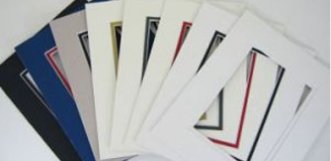
Mat Board—A multi-ply board usually comprised of a core, adhesive, facing and backing paper, commonly four ply, but available in other thickness. May be rag board or made of wood fiber. The surface paper comes in a wide variety of colors. In framing, used to make the window mat and as a mounting board for artwork.

Mat—As used in picture framing, a stiff material, such as cardboard, with an opening cut from the center so that it forms a border between the outer edges of a picture and the inner edge of a frame, commonly referred to as a window mat.

Mat(ting)—A border, usually made from one or more window mats, placed around a print, photograph, etc., to serve as a spacer or separation between the picture and the frame.

Mechanical Wood Pulp—Any wood pulp manufactured wholly or in part by a mechanical process, including stone-ground wood, chemigroundwood and chip mechanical pulp. Uses include newsprint printing papers, specialty papers, tissue, toweling, paperboard and wallboard.

Methyl Cellulose—A synthetic bonding agent (adhesive) derived from cotton or wood cellulose that has been chemically altered. It is soluble in cold water, and has a long shelf life.

Migration ( see Bleed)

Millimeter—millimetre - a unit of length equal to one thousandth of a meter and equivalent to 0.03937 inch. Abbr.: mm

Mold (papermaking)—A mesh screen through which paper slurry is drained. Excess liquid drains away, allowing the pulp to dry enough to be handled.

Mold-Made Paper—A deckle edged paper resembling that made by hand but produced on a machine. It is made on a cylinder or cylindrical mold revolving in a vat of pulp, the various sizes being arrived at by dividing the surface with rubber bands to imitate the thinning of the deckle edge of handmade paper or by cutting the web by means of a jet of water or, in general, paper made on a cylinder mold machine.

Molecular Sieve or Molecular Trap—Any zeolites or similar material, natural or synthetic, having small, precisely uniform pores that can adsorb molecules small enough to pass through the pores.

Monobasic Acid—an acid containing one replaceable hydrogen atom.

Mordant—a substance used in dyeing to fix the coloring matter, esp. a metallic compound, as an oxide or hydroxide, that combines with the organic dye and forms an insoluble colored compound or lake in the fiber.

Mounting Board—A paperboard upon which sheets are mounted. It is most often from 2-4mm thick. It has a high smooth finish and is stiff to resist warping.

Multi-Ply—Made up of two or more plys.

Museum Board—This generic term refers to quality matboard, and the properties required for this product are generally the same as for any "permanent" paper

       Note 1.—Both terms, Museum Board and Conservation Board, are often used interchangeably to mean the same thing.

       Note 2—Many use the term Museum Board to designate all cotton and the term Conservation Board to designate archival quality, non-cotton boards (see Permanence, Archival)


N's

Nanometer—one billionth of a meter a measurement used with the spectrum of light waves also see Angstrom.

Neutral—Of or relating to a solution or compound that is neither acidic nor alkaline. Of or relating to a compound that does not ionize in solution. Of or relating to a particle, an object, or a system that has neither positive nor negative electric charge. Of or relating to a particle, an object, or a system that has a net electric charge of zero.

Neutral Colour—Of or indicating a color, such as gray, black, or white, that lacks hue; achromatic. A neutral hue. A color that is neither warm nor cool-i.e. not dominated by red or blue. Medium grays and browns are usually considered to be neutral.

Neutral gray—a. gray; without hue; of zero chroma; achromatic.

Neutral Kraft—A Kraft paper with a pH of 7.0 and produced so as to be relatively acid and sulfur free. It is used in the textile industry where contact with wet materials precludes use of regular Kraft which may give rise to staining and discoloration of textiles.

Neutral pH—A pH factor 6.5 to 7.5.

Neutral Size—A form of rosin size which is neither acidic nor alkaline in nature.

Neutral Sulfite Pulp—Pulp produced in a process where the active cooking agent is sodium sulfite, adjusted with sodium carbonate so that it is neither acid nor alkaline. Hardwoods are especially responsive to this form of pulping which results in pulp having relatively high tensile and bursting strength.

Neutralize—To make a solution neutral (neither acidic or basic, pH 7) by adding a base to an acid solution, or an acid to a basic solution.

New Rag—Cotton fabrics and mill cuttings from the textile industry that have never been used.

Nonfibrous—to be free of fibers.


O's

Off Square—Term applied to sheet materials (paper or glazing) which have been cut or trimmed so that two or more corners deviate from an exact 90º angle.

Offset—In matting, an additional dimension added to the bottom margin of the window mat to balance visual proportioning.

Opaque-Opacity—not transparent or translucent; impenetrable to light; not allowing light to pass through.

Optical Brightener—Chemical additive to a papermaking furnish that improves the apparent brightness of the product by the introduction of fluorescence. Also called Fluorescent Brightening Agent.

Optical Properties—Grouping of paper properties that includes brightness, opacity, color, gloss, and light scattering coefficient.

(a) Optical Tests—Tests carried out on paper and board products to quantify and monitor their optical properties.

Optical Smoothness—Ability of a paper sheet surface to reflect incident light.

Optical Whitening—Process of adding an optical brightening agent to paper stock in order to achieve a specified improvement in apparent brightness. Also called Fluorescent Whitening.

Organic Pigments—Characterized by good brightness and brilliance. They are divided into toners and lakes. Toners, in turn, are divided into insoluble organic toners and lake toners. The insoluble organic toners are usually free from salt-forming groups. Lake toners are practically pure, water-insoluble heavy metal salts of dyes without the fillers or substrates of ordinary lakes. Lakes, which are not as strong as lake toners, are water-insoluble heavy metal salts or other dye complexes precipitated upon or admixed with a base or filler.

Organic—Of, related to, or derived from living organisms.

Outgassing—The release of gases from a material.

P's

Paper—A material made of cellulose pulp, derived mainly from wood, rags, and certain grasses, processed into flexible sheets or rolls by deposit from an aqueous suspension, and used chiefly for writing, printing, and drawing.

Paperboard—In paper terminology, there are two basic categories: Paper and Paperboard. Paperboard is generally stiffer, thicker, and heavier than paper. Paperboard-In the artistic and picture framing communities the more common terms are: illustration boards, mounting boards, mat boards, etc. Their composition and characteristics may also more closely define all of these board types.
(a) Preservation in mat and mounting boards is defined by FACTS Standard "PMMB-2000" or latest revision.
(b) In paper making the distinction between paperboard and paper is not sharp but, broadly speaking, paperboard is heavier in basis weight, thicker, and more rigid than paper. In general, all sheets 12 points (0.012 inch) or more in thickness are classified as paperboard.

Parchmentizing Parchmentize—(Chemical process) The treatment of unsized cotton or purified chemical wood pulp paper by sulfuric acid or other chemicals under controlled conditions to produce Vegetable Parchment Paper.

Permanence—The term ascribed to a material which under specified conditions resists changes in any or all of its properties with the passage of time.

Permanent paper—usually refers to a durable paper manufactured according to one or more of the following;
(a) ANSI Standard Z39.48 (recently revised-ANSI/NISO 39.48-1992) Permanence of Paper for Printed Library Materials(or latest revision.)
(b) FACTS Standard "MMB-127-97" Preservation Standards for Paper and Paper Products (or latest revision.)

Pearlescent Pigments—A class of pigments consisting of particles that are essentially transparent crystals of a high refractive index. The optical effect is one of partial reflection from the two sides of each flake. When reflection from parallel flakes reinforce each other, the result is a silvery luster.

Petrochemical— a chemical substance obtained from petroleum or natural gas, as gasoline, kerosene, or petrolatum

pH (potential for Hydrogen)—pH is a measure of the concentration of hydrogen ions in a solution. This logarithmic measurement indicates, on a scale of 0 to 14, the relative acidity or alkalinity of a given solution. pH values from 0 to 7 indicate acidity; from 7 to 14 alkalinity. 7.0± .5 is considered the neutral range-also called pH Neutral.

pH Testing— pH Pen—a felt tipped pen filled with chlorophenol red a pH indicator. The chlorophenol red when applied to paper will become yellow or colorless which indicates an acidic condition pH below 6.0. If the chlorophenol red mark turns purple it indicates a alkaline condition above 6.7. This test is only an indicator of the pH of the surface area tested and can not be considered a reliable test for the total condition of any paper or board. As there are many conditions which can influence this measurement an give false reading as to the true condition of the board or paper e.g. handling, surface contamination, sizing, adheasives, and packing materials.

Phenylpropane—a substance, C9H13NO, related to ephedrine and amphetamine, available in various popular nonprescription diet aids as an appetite suppressant

PAT (Photo Activity Test)—This test is designed to determine whether a material that is meant to be used in close proximity to photographs is likely to damage the image. In this case, matboard would be incubated at an elevated temperature and relative humidity with photographic materials, and changes in the photographic reference materials would be measured with a densitometer.

Photo Mounting Board—A term used to describe mat and mounting boards with preservation qualities, but without an alkaline reserve requirement. These boards, having a pH between 7 and 7.5, as in ANSI Standard IT9.2-1991 and FACTS Standard "MMB-127-97" or latest revision" may also have special surface qualities designed for the mounting of photos.

Pigment—A finely powdered coloring material used in paints and inks. Pigments are used in paper to alter physical properties as well as to add color and improve brightness and opacity.
(a) Color—A pigment is insoluble in the liquid vehicle with which it is mixed, imparting its color effect by being spread over a surface.
(b) Soluble Colors—that impart their hues to substances by staining or being imbibed by them are called dyes.

Plasticized- any of a group of substances that are used in plastics or other materials to impart viscosity, flexibility, softness, or other properties to the finished product.

Ply—One of the separate webs which make up the sheet of paper. One of the sheets which are laminated together to build up a pasted board of given thickness. One of the separate layers which together make up a multilayer aggregate such as multi-ply tissues, multiwall shipping sacks, and carbon-interleaved business forms. The sheets which are laminated together to build up a solid fiber or pasted board of a given thickness.

Pollutant—Any introduced gas, liquid or solid that makes a resource unfit for a specific purpose.

Pollution—The presence of matter or energy whose nature, location or quantity produces undesired effects (i.e., environment, art, paper, books, framing materials).

Postconsumer Waste—Paper-Paper and/or paperboard products that have gone through their intended use and have been discarded. Includes used corrugated boxes, old newspapers, old magazines, mixed waste paper and tabulating cards. Paper waste created in converting operations is generally but not always excluded from postconsumer waste paper.

Polymer-Polymers—a compound of high molecular weight derived either by the addition of many smaller molecules, as polyethylene, or by the condensation of many smaller molecules with the elimination of water, alcohol, or the like, as nylon.

Polysaccharide—a carbohydrate, as starch, inulin, or cellulose, containing more than three monosaccharide units per molecule, the units being attached to each other in the manner of acetals, and therefore capable of hydrolysis by acids or enzymes to monosaccharides.

Polystyrene—A rigid, clear thermoplastic polymer that can be molded into objects or made into a foam.

Preservation—As used with framing for display: work done using methods and materials designed to maintain the conditions and longevity of the item. Preferred to the term Conservation which is most often used when there is treatment to the artwork or item.

Pressure Sensitive Boards—Any of a variety of paper or foam boards with a adhesive surface to which another material may be adhered by the application of pressure.

Printability—the ability of the surface to be printed upon.

Protolignin—see lignin

Pulp—Fibrous material produced either chemically or mechanically (or by some combination of chemical and mechanical means) from wood or other cellulosic raw material. Pulp is the principal raw material for papermaking.

Pulping Process—Any process for converting fibrous raw material into pulp. Pulping processes are usually classified into mechanical, chemical and semi-chemical methods.

Pulping—The operation of reducing a cellulosic raw material, such as pulpwood, rags, straw, reclaimed paper, etc., into a pulp suitable for further processing into paper or paperboard or for chemical conversion (into rayon, cellophane, etc.). Pulping may vary from simple mechanical action to rather complex digesting sequences and may be conducted in batch or continuous equipment.

Pulpwood—Those woods which are suitable for the manufacture of wood pulp. The wood may be in the form of logs as they come from the forest or cut into shorter lengths suitable for the chipper or the grinder. The term may also be applied generically to chips produced from groundwood or from whole trees remote from the pulp mill.


Q's & R's

Rag Board—Matboard from non-wood products such as cotton linters, or cotton which are naturally lignin free, stable and durable.

Rag Content—Papers containing a minimum of 25% rag or cotton fiber. These papers generally are made in the following grades: 25, 50, 75, 100% and extra No. 1 (100%). They are used for bonds, currency, writing, ledgers, etc.

Rag Paper—The term "rag paper" in the paper industry has become a generic label for any paper containing a minimum of 25% fibers of non-wood origin. This could mean actual rags, cotton threads, cotton linters, linen or manila hemp fibers. Traditionally, rag papers were made from discarded cotton or linen clothing or textile mill cuttings which were hand sorted for contaminants, cooked and beaten to produce rag pulp. Today there are only three mills left in the United States that have the capability to produce true rag paper in this manner. These special papers are usually thin papers which require the extra strength gained from the longer cotton fibers in actual rag pulp. US currency, engineering/architectural blueprint and tracing papers typically contain real rag fibers. The vast majority of "rag" or cotton fiber papers are made with 25% to 100% cotton linters. 100% rag mat or mounting board is made from 100% cotton linters.
Rag Pulp—Papermaking fibers made from new or old cotton textile cuttings. The term may also apply to cotton, flax, hemp, or ramie in the form of textile waste, textile returns or cotton linters-i.e. the short fibers which adhere to the cotton seed after the ginning process. Rag pulps can be used in papers where permanence and durability needed, e.g., ledger, blueprint, map, currency papers, etc.

Rags—Discarded textile materials derived from vegetable fibers, such as clothing, curtains, linen, etc. and cuttings from factories manufacturing these products. The increased use of synthetics in textiles has caused a scarcity of good quality rags.

Recovered Materials—In plant waste falls into the category of recovered materials, of which Recycled/Post Consumer Waste is a subset. In plant waste such as "mill broke" or envelope trimmings cannot be called recycled because it is not post-consumer. FTC & EPA define cotton linters as "Recovered Materials".

Recycled Fiber—Cellulose fiber reclaimed from waste material and reused, sometimes with a minor portion of virgin material, to produce new paper.

Recycle—Recycling In the paper industry, recycling refers to the process involved in making new paper out of previously used paper including in-plant and post consumer waste.

Resins—any of a class of nonvolatile, solid or semisolid organic substances, obtained from certain pines and plants, as copal or mastic, consisting of amorphous mixtures of carboxylic acids as exudations or prepared by polymerization of simple molecules: used in medicine and in the making of varnishes and plastics.

Rutile—a common mineral, titanium dioxide, TiO2, usually reddish-brown in color with a brilliant metallic or adamantine luster, occurring in crystals.


S's


Semibleached—Any papermaking pulp which has been partially bleached and therefore has a brightness in the range from GE 45 through 75.

Silicate—any of the largest group of mineral compounds, as quartz, beryl, garnet, feldspar, mica, and various kinds of clay, consisting of SiO2 or SiO4 groupings and one or more metallic ions, with some forms containing hydrogen. Silicates constitute well over 90 percent of the rock-forming minerals of the earth's crust.

Sizing Agent—Any material added to paper that increases the paper's resistance to penetration by liquids. A material mixed with the stuff or stock prior to papermaking is called an "internal size." The most common internal size in machine papermaking consists of a rosin emulsion precipitated with alum. Cellulose-reactive internal sizes (such as Hercon®) are used in making permanent papers since alkaline conditions and the freedom from acidity are requisite. A size applied after the sheet is formed and dried is called an "external" or "surface" size. Surface sizes (such as starch or gelatin) not only alter resistance to liquids but also affect surface smoothness, erasability, strength, gloss, stiffness, and printability.

Sizing—Treatment of paper to resist liquid penetration, either by means of wet-end additives (e.g., rosin and alum) or surface application (e.g., starch solution). Any material used for sizing (i.e., reducing liquid penetration), an extremely dilute solution of a gluey or resinous substance applied to a surface in order to reduce its absorbency or porosity and make it more receptive to application of paint or another coating material for example rosin with alum, starch, animal glue, gelatin, latex, etc.

Soda pulping—alkaline chemical pulping process similar to the kraft process, except that sodium hydroxide (NaOH) is used alone as the active chemical.

Sodium Carbonate—Commonly known as soda ash, sodium carbonate (Na2CO3) is an inorganic salt which is strongly alkaline in water solution. It is also an intermediate in the preparation of caustic liquor in the soda pulping process.

Softwood fibers—fibers from coniferous trees i.e. nonporous wood.

Solvent Sizing—The use of rosin in a solvent solution, the sizing being applied to the unsized paper and the solvent being removed by evaporation and recovered. (see Sizing)

Specialties—Grades paperboard (matboard) made with specific characteristics and properties to adapt them to particular uses. Grades paperboards made in a given mill which are not the primary products of that mill. (see surface effects)

Specialty Surfaces—(see surface properties)

Stability—The ability of paper or paperboard to resist change in any of its properties on exposure to various conditions.

Stabilized—A paper whose moisture content is in equilibrium with the moisture of the surrounding air.

Stabilizer—An ingredient used in the formulation of some plastics to assist in maintaining the physical and chemical properties of the compounded materials at their initial values throughout the processing and service life of the material.

Standard Test Environment—Conditions of temperature and humidity agreed upon by convention and used as reference conditions for testing. In North America, the Standard Environment is 21ºC (70ºF) and 50% relative humidity.

Starch—a white, tasteless, solid carbohydrate, (C6H10O5)n, occurring in the form of minute granules in the seeds, tubers, and other parts of plants, and forming an important constituent of rice, corn, wheat, beans, potatoes, and many other vegetable foods.

Stock Sizes—Common sizes of papers and boards which are usually stocked by producers, distributors, or consumers.

Sulfate—The term refers to a strong papermaking fiber produced by the kraft process. (see Kraft Pulp)

Sulfite Process—Generic term for any chemical pulping process employing sulfurous acid and/or bisulfite ions as the primary or secondary delignification chemicals. (see Neutral Sulfite Pulp)

Sulfite pulping process—generic term for any chemical pulping process employing sulfurous acid and/or bisulfate or sulfite ions as the primary or secondary delignifiacation chemicals.

Sulfur Dioxide—A colorless gas (SO2) formed when sulfur burns in air. It dissolves in water to give sulfurous acid which, when reacted with soluble bases yields bisulfites, compounds used in the sulfite pulping process.

Sulfuric Acid—Also called oil of vitriol, sulfuric acid (H2SO4), is used in the paper industry to parchmentize paper, to prepare chlorine dioxide bleach from sodium chlorite, to dissolve certain wet strength resins, etc.

Sunfast—not subject to fading in sunlight, as a dye

Surface Coated—A term applied to any paper or paperboard which has one or both sides coated with a pigment of other suitable material.

Surface Coloring—Application of a coloring agent (dye) to the surface of paper. The dyeing may be a part of the papermaking operation on the paper machine or it may comprise a separate operation, either on the paper machine or as an off-machine operation.

Surface pH—pH value of the surface layer of paper.

Surface Properties—Grouping of paper properties that includes roughness, surface strength, erasability, and abrasion resistance.

Surface Sized—An adjective describing paper or paperboard whose surface has been treated with a sizing material applied to the dry or partially dried sheet either on the paper machine or as a separate operation.

Synthetic latices—colloidal dispersions of synthetic polymers or copolymers used as binders and stock additives for internal bond strength and internal sizing.


T's

Test—A procedure for critical evaluation; a means of determining the presence, quality, or truth of something. A basis for evaluation or judgment.

Test Accuracy—Difference between the test value and the true value. In practice, assessment of test accuracy is often difficult because the "true value" may not be easily determined.

Test Measurement—Single quantitative value obtained from a test determination. More than one test measurement is commonly required in a test method.

Test Method—Detailed, step-by-step procedure for carrying out a test procedure and determining test results.

Test Precision—Measure of the variation that can be expected when repeated tests are made on the same specimen or on a near-duplicate specimen.

Test Procedure—Detailed procedure for the measurement of a specific property or quantity.

Test Result—Value obtained for one test unit of a sample material. This value may be a single determination or an average.

Texture—The characteristics of a sheet that pertains to its feel and appearance such as a rough or grainy surface quality. (a) Texture (of paper)-Surface finish and smoothness.

Thermoplastic—oft and pliable when heated, as some plastics, without any change of the inherent properties.

Tinctorial—pertaining to coloring or dyeing.

Titanium Dioxide—The white oxide of titanium, TiO2. There are two crystalline forms useful to the paper industry: the anatase form employed primarily as a filler pigment and the rutile form used primarily in pigmented coatings. Both types are particularly useful because of their white color, high brightness, and high refractive index (2.52-2.76) which makes them highly effective for improving both brightness and opacity. Commercial grades are usually specially treated to facilitate use in the many papermaking and coating applications and to provide particle size for optimum optical behavior.

Titanium Pigment—The name given to the type of titanium white made with barium sulfate or some other inert component, as distinguished from pure titanium dioxide.

Titanium White—Titanium dioxide; a dense, opaque, white pigment, highly inert chemically, and therefore of the highest permanence in all artists' paints.

Tooth—A characteristic of the grain in the surface of various papers, especially drawing papers, handmade papers, and other papers of low finish. The term is used to describe their ability to take pencil or crayon marks. The roughness or surface contour of the paper is one factor in its tooth, and probably the fuzz and the stiffness of fibers projecting from the surface is another. Also referred to as bite. Also a patterned roughness in the form of minute depressions between fibers or groups of fibers on the surface, a characteristic of some low-finish papers which facilitates pencil or crayon marking. Tooth can be produced on the paper machine during forming or pressing.


U's

Ultraviolet Spectroscopy—Identifying a substance by photography of spectrum lines in the ultraviolet region (wavelength) through a spectroscope. (see Appendix,)

UV (Ultraviolet or Ultraviolet Rays)—That portion of the invisible spectrum that lies beyond the violet or on the shorter wavelength side of the visible spectrum; that portion of the light spectrum between 200 and 400 nanometers.

V's
Virgin Fiber (Primary Fiber)—Pulp used for papermaking that has not previously been used in any paper or board product.

Virgin Pulp (Virgin Stock)—Pulp that has not previously been used in the papermaking process. It is distinguished from Secondary Stock.


W's

Warp—Loss of flatness for paperboard sheets or corrugated board.

Wet strength—a test of tensile strength of a wetted strip of paper.

White—The achromatic color of maximum lightness; the color of objects that reflect nearly all light of all visible wavelengths; the complement or antagonist of black, the other extreme of the neutral gray series. Although typically a response to maximum stimulation of the retina, the perception of white appears always to depend on contrast.

Whiteness—Extent to which a sheet of paper approaches theoretically perfect white due to high brightness, high light scattering and minimum perceivable hue. In practice the terms brightness and whiteness are used interchangeably.

Whiting—Native calcium carbonate mined in various parts of the world and used as an inert pigment in such products as gesso.

Wood Pulp—Refers to a wide variety of chemically processed softwood and hardwood fibers normally used by the machine papermaking industry. Fiber also be produced by the mechanical treatment of wood. Fiber length varies considerably depending on the source and the degree of treatment of the pulp. (a) Unbeaten softwood fibers usually have an average length of 3 to 5 millimeters and an average width of about .040 millimeters. Hemicellulose content ranges from several percent to twenty percent; and lignin content, from zero to twenty-seven percent, depending on pulping yield and bleaching. (b) Hardwoods by comparison average 1 to 2 millimeters in width, and have similar hemicellulose and lignin contents. (see alpha pulp see groundwood)

Wood-Pulp Board—Paperboard made of wood pulp or a combination of virgin wood pulp and reclaimed paper stock.


X's & Y's

Yellowing—Sometimes called color reversion. A gradual change from the original appearance of a pulp or a paper as a result of environment or aging.


Z's

Zeolite—An inert crystalline aluminosilicate which has an affinity for specific molecules. Naturally occurring but often man-made to specific performance characteristics. Also called molecular traps or molecular sieves.

PPFA

New Zealand's Qualified Framing Professionals

Fine Art Trade Guide